
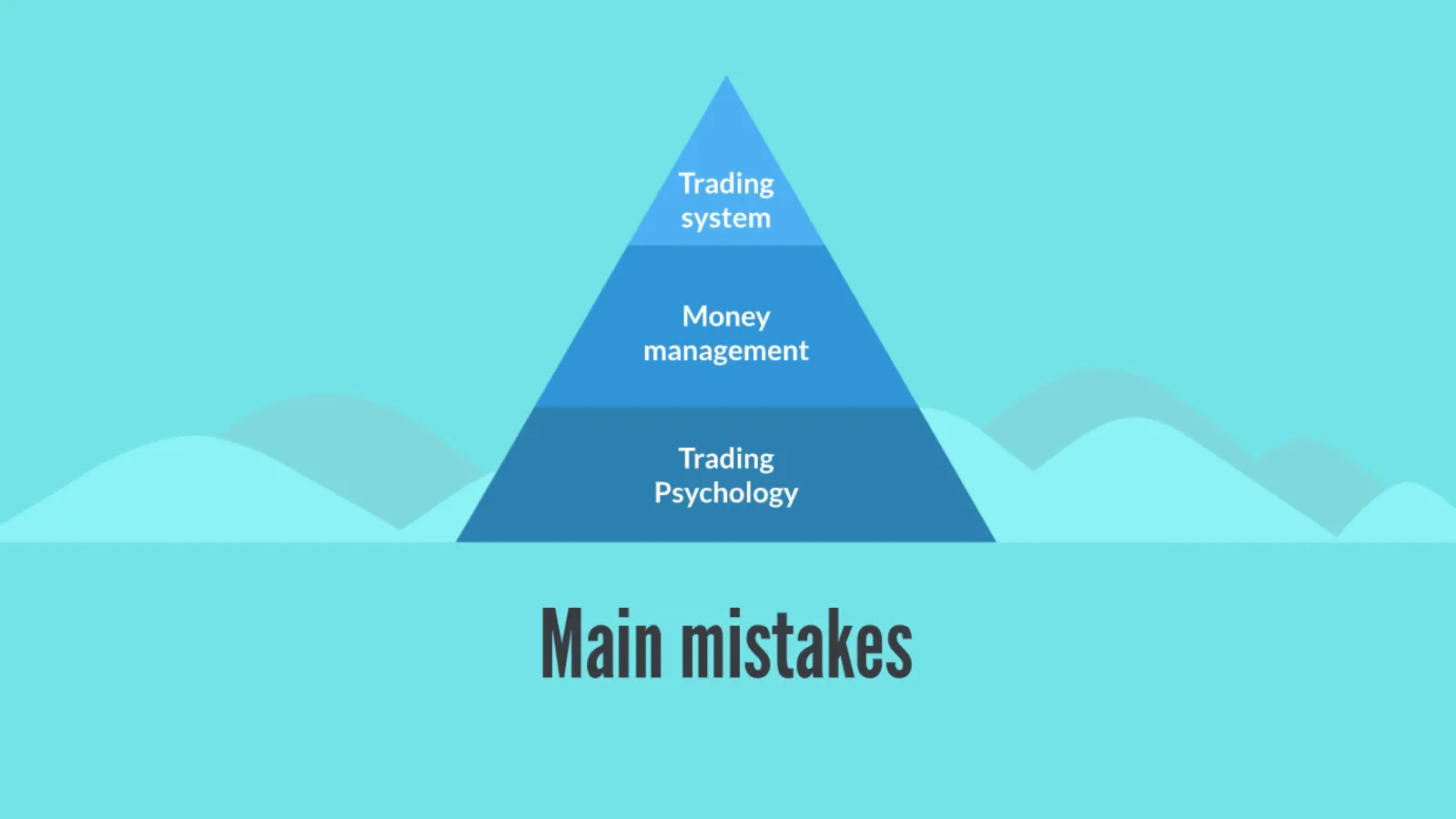
When trading, beginners often make mistakes. They usually fall into three categories:
Trading system mistakes — lack of a strategy, incorrect application, or poor choice of instruments.
Capital management mistakes — excessive risks, ineffective stop-losses, and averaging down.
Psychological mistakes — fear, greed, and lack of discipline.
Let’s look at each group in detail.
1. Trading System Mistakes
Starting without testing
Many begin trading without testing their strategy. The right approach is to test the system:
- using software to backtest on historical data;
- manually analyzing charts and recording entry and exit points.
Ideally, you should make at least 200 test trades to determine:
- total profit or loss;
- * eturns over time;
- percentage of losing trades;
- maximum drawdown.
If the system isn’t profitable in testing, it shouldn’t be used on a live account.
Choosing the wrong instrument
A trading strategy may fail on illiquid assets. Beginners should choose highly liquid instruments, as they are easier to analyze and more predictable.
Deviating from the plan
Even a perfect strategy won’t work if its rules are ignored. Discipline is more important than the system itself.

2. Capital Management Mistakes
Excessive leverage
Beginners often increase leverage after a few successful trades, which can lead to significant losses.
Incorrect stop-loss placement
Stops that are too tight lead to random trade closures.
Stops that are too wide trigger rarely but cause large losses.
Tip: Place stops beyond nearby highs or lows to reduce the chance of being stopped out prematurely.
Averaging down
Trying to improve entry price on a losing position.
This is risky, especially with borrowed funds, and can lead to a margin call (forced position closure by the broker).

3. Psychological Mistakes
Holding losing trades
One of the most dangerous mistakes: moving or removing stops in hope of a reversal. This often leads to growing losses.
Closing profits too early
Closing trades at minimal profit out of fear of losing gains. This reduces the strategy’s overall expected return.
Chasing the market
Entering trades emotionally during sharp price movements, often without proper analysis or planning.

How to avoid mistakes?
Create your own trading system
Even a simple strategy applied with discipline is more effective than emotional trading.
Keep a trading journal
Record:
- reasons for opening trades;
- stop levels and profit targets;
- trade outcomes.
Analyzing your journal helps identify and eliminate mistakes.
Maintain discipline
Strictly follow your system and control emotions — this is the key to success.
Conclusion
Most mistakes come not from the market, but from the trader. A systematic approach, emotional control, and proper capital management will help you avoid losses and improve profitability.