
A pip (from “percentage in point”) is the smallest price change of a currency pair.
In other words, a pip is a unit of measurement for price movement, used by traders to calculate profit and loss.
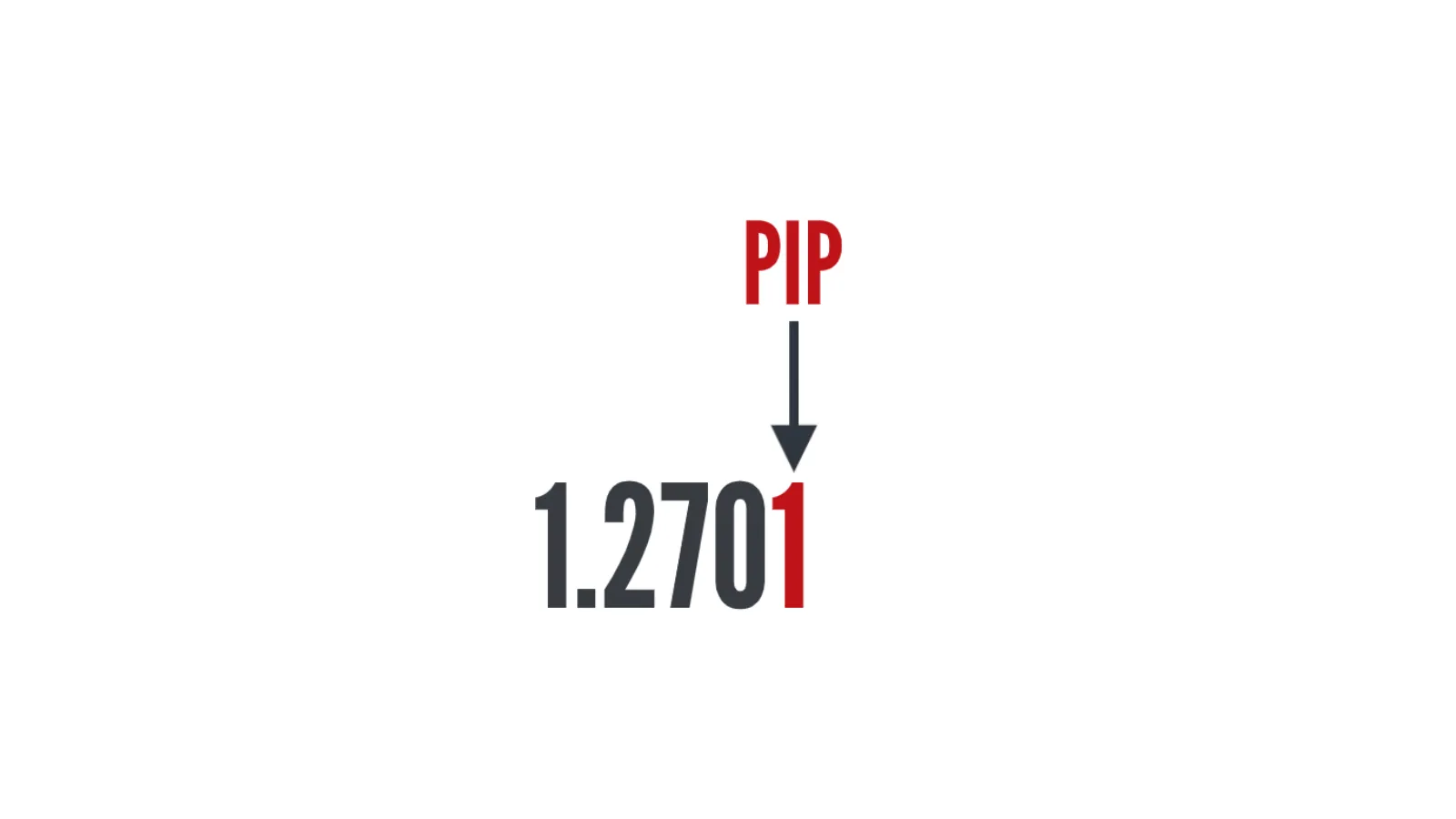
Where is a pip in a quote?
For most currency pairs: a pip is the 4th digit after the decimal point.
Example: EUR/USD changes from 1.2345 → 1.2346 = +1 pip
For pairs with the Japanese yen: a pip is the 2nd digit after the decimal point.
Example: USD/JPY changes from 110.25 → 110.26 = +1 pip
What is a tick?
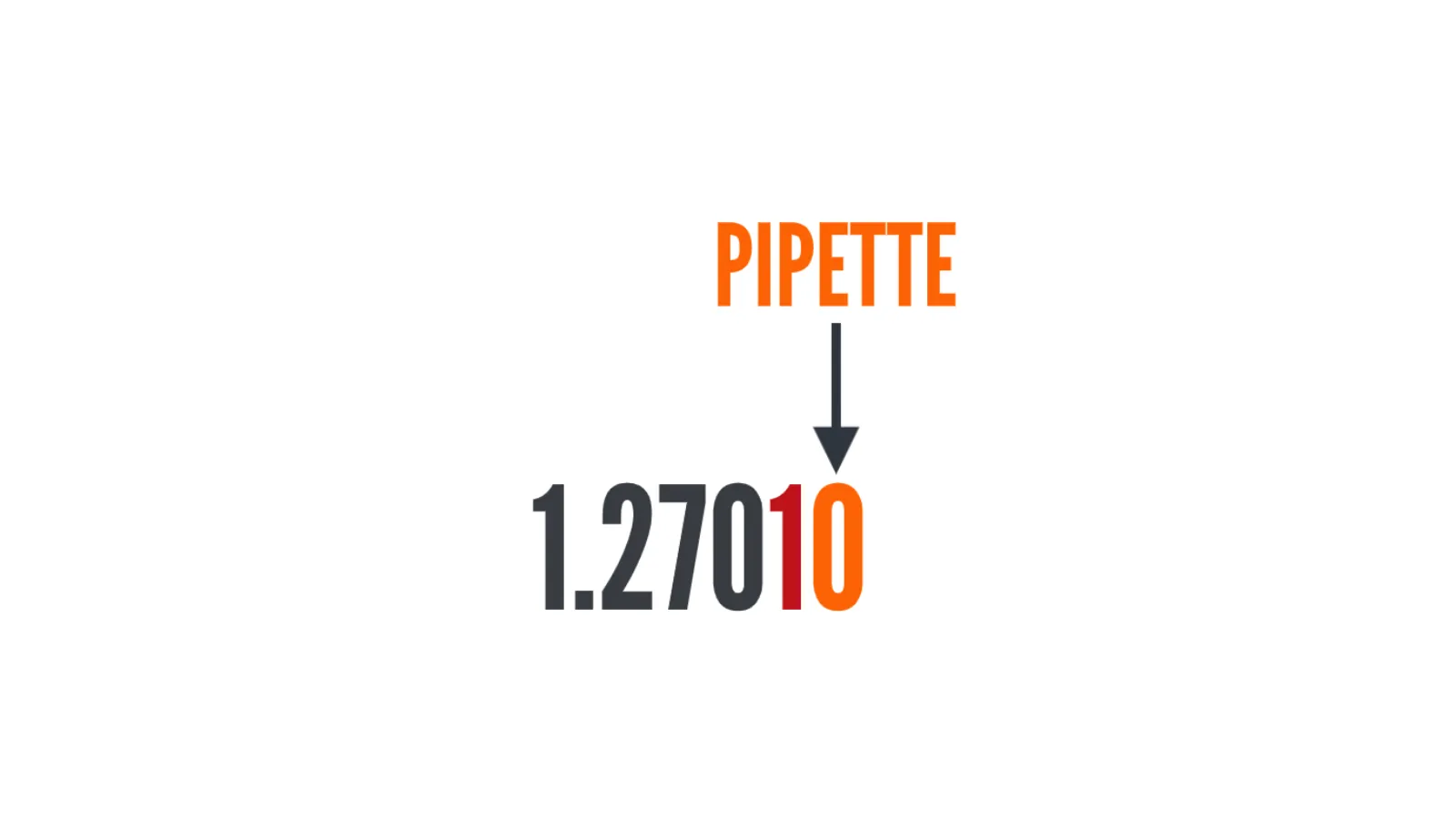
A tick is one-tenth of a pip.
Example: EUR/USD changes from 1.23451 → 1.23452 = +1 tick.
10 ticks = 1 pip.
Ticks are important for scalpers and those trading on very small price movements.
How is a pip different from a point?
Pip: fractional price change (after the decimal).
Point: whole number price change (for example, from 1.2345 to 2.2345 = 1 point).
How to calculate pip value?
The value of a pip depends on:
- the currency pair,
- the position size (lot),
- the account currency.
Formula:
Pip value = (Trade volume × Price change) / Number of pips
Example:
Pair: EUR/USD
Position: 0.19 lot (19,000 units)
Open price: 0.6971
Close price: 0.6871 (difference = 100 pips)
Calculation:
(19,000 × 0.6971) − (19,000 × 0.6871) = \$190
\$190 ÷ 100 pips = $1.9 per pip
Result: 1 pip = \$1.9.
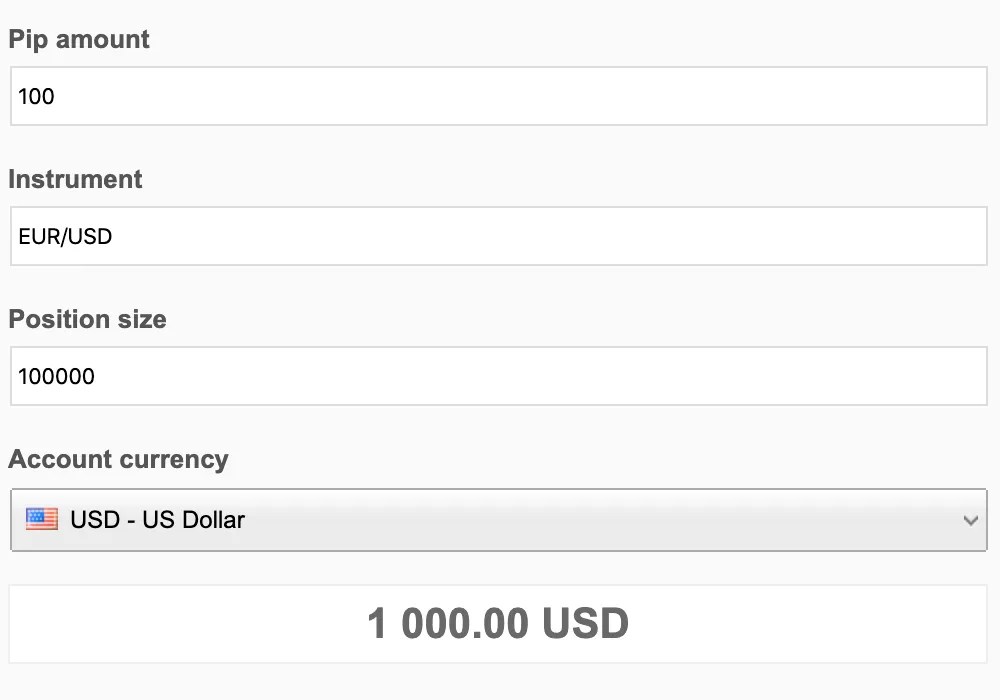
Easier way: Use a trader’s calculator (available on broker websites) — it automatically calculates pip value, margin, spread, and swaps.
Why does a trader need to know pip value?
To plan trades: understand how much you’ll gain or lose when the price changes.
To calculate risk: determine the optimal position size.
To track performance: evaluate results in pips, not just in money.
Important: Professional traders think in pips, not dollars. This helps assess trades objectively and avoid emotional decisions.