
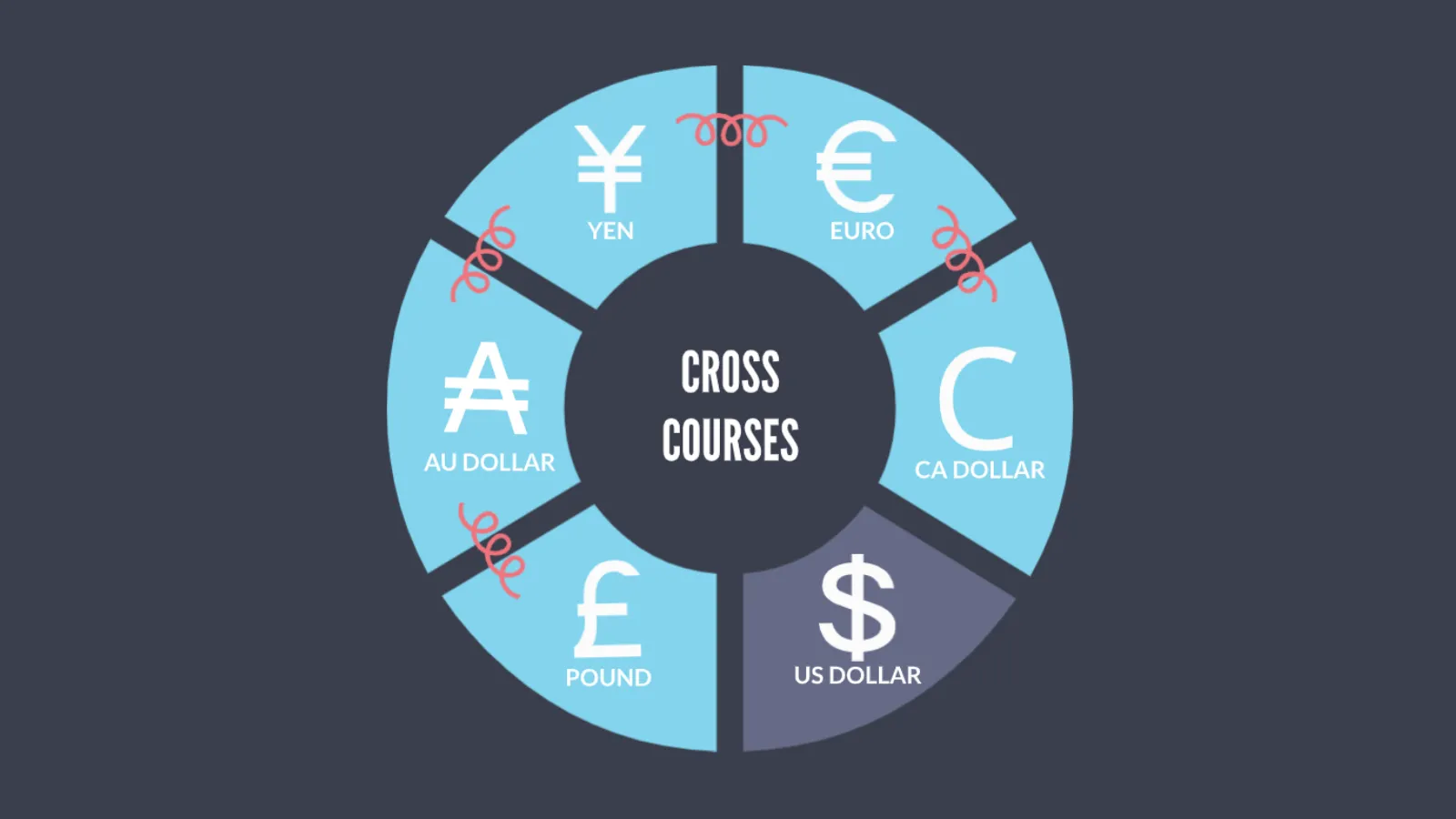
Cross rates are currency pairs that do not include the US dollar (neither as the base nor the quote currency).
Examples:
Crosses: EUR/GBP, GBP/JPY
Major pair: USD/JPY (includes the US dollar)
Exotic pair: EUR/ZAR (euro + a currency of a developing economy)
The World’s Most Traded Currencies
USD — US dollar
EUR — euro
GBP — British pound
AUD — Australian dollar
NZD — New Zealand dollar
CAD — Canadian dollar
CHF — Swiss franc
JPY — Japanese yen
A cross pair is any combination of these currencies without the USD
Why Trade Crosses?
More trading opportunities
When major pairs are moving slowly, crosses may show stronger trends (e.g., EUR/USD may be flat during the Asian session, while AUD/JPY can be active).
Direct currency exchange without USD
In the past, trades had to be converted through the dollar; now it’s no longer necessary.
Liquidity of Crosses
Major crosses (e.g., GBP/JPY, EUR/GBP) — relatively liquid but less than majors.
Exotic crosses — low liquidity: higher spreads, sharper price moves, and greater risks.
Trading Features
Double-edged nature:
Low liquidity leads to strong trends, but reversals can be sudden.
High spreads:
Trading costs are higher, especially for exotic pairs.
Range + volatility:
Before strong trends, crosses may experience sharp fluctuations, leading to multiple small losses before catching a profitable move.
Using Economic Reports
Strong economy → increased demand for its currency → potential upward trend.
Weak economy → decreased demand → potential downward trend.
Strategy: Buy the currency of a strong economy against that of a weaker one.
Conclusion
Cross rates expand trading opportunities but require caution due to higher volatility and spreads. They are well-suited for identifying trends after the release of key economic reports.