

Currency correlation is the relationship between the price movements of currency pairs.
Positive correlation — pairs move in the same direction (e.g., EUR/USD and GBP/USD).
Negative correlation — pairs move in opposite directions (e.g., EUR/USD and USD/JPY).
Important: Correlation is never constant — it changes under the influence of fundamental factors.
Why Do Pairs Correlate?
A currency is part of a larger economy: if the US dollar rises against one currency, it often rises against others.
Currency pairs are not traded in isolation — movement in one pair affects related instruments.

Measuring Correlation
Correlation is expressed on a scale from +1 to -1:
+1 — perfect positive correlation (move identically).
-1 — perfect negative correlation (move in opposite directions).
0 — no connection.
Why Should a Trader Know Correlation?
Risk management
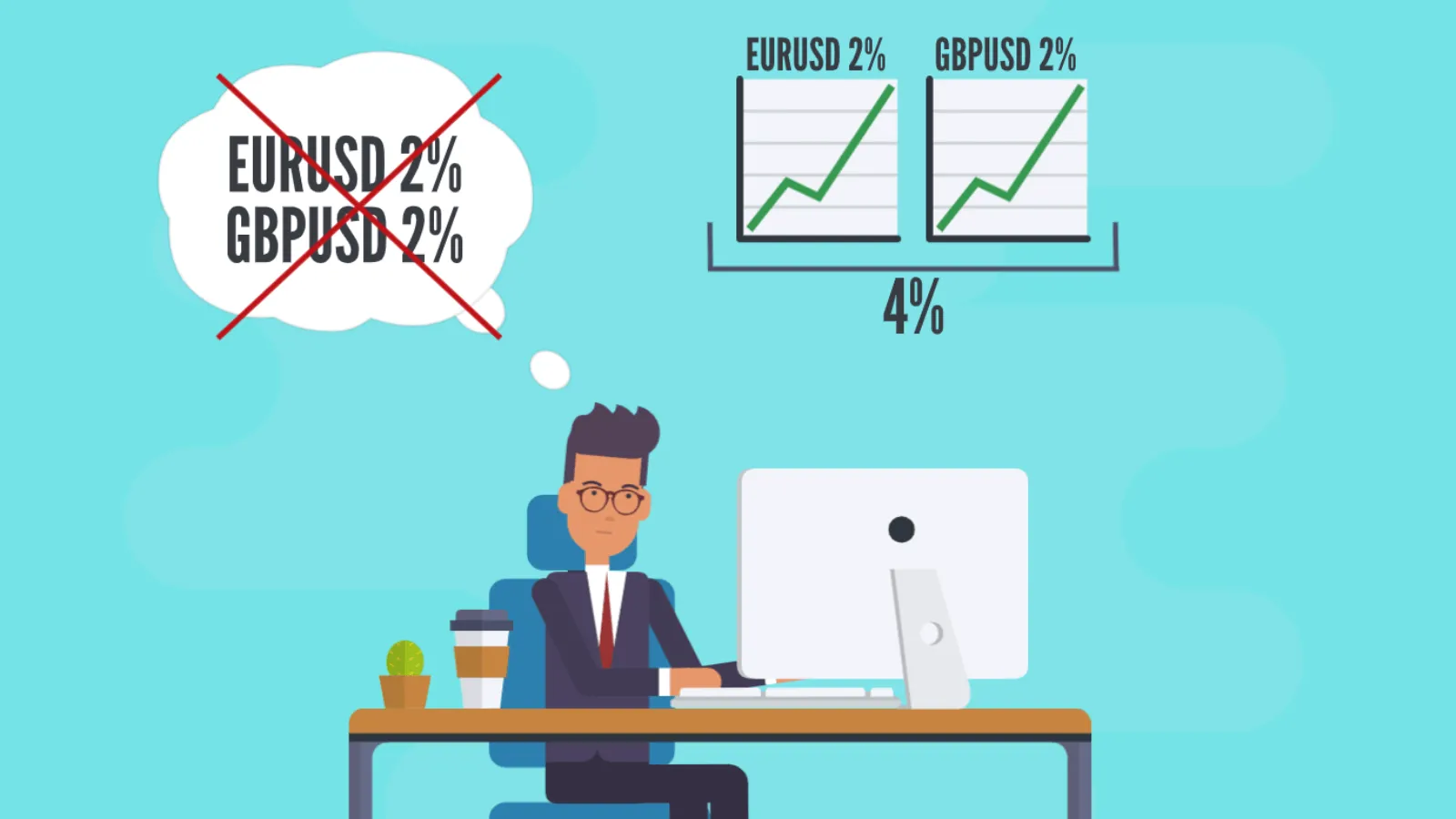
Opening long positions on EUR/USD and GBP/USD increases risk since they move similarly.
Opposite positions on strongly correlated pairs may offset each other’s profit and loss.
Signal confirmation
If EUR/USD is falling and GBP/USD and AUD/USD are moving similarly, it confirms a trend.
Filtering false breakouts
If a breakout occurs on one pair but correlated pairs remain flat, it’s likely a false move.
Practical Examples
Positive correlation:
EUR/USD ↔ GBP/USD
AUD/USD ↔ NZD/USD
Negative correlation:
EUR/USD ↔ USD/JPY
GBP/USD ↔ USD/CHF
How to Use Correlation in Trading?
Analysis: Compare multiple pairs to confirm a trend.
Avoiding mistakes: Check correlated pairs during breakouts or sharp movements.
Risk control: Don’t open multiple same-direction positions on highly correlated pairs — this increases exposure.
Conclusion:
Understanding currency correlation helps traders confirm signals, avoid false moves, and manage risks more effectively.